


SaaS Packaging: Turning Product Complexity into Revenue Clarity

Updated: Feb 25
At its best, SaaS packaging creates a value ladder — a structured progression where each tier clearly corresponds to:
A different customer maturity level
A broader or deeper use case
A higher level of value delivered
Lower tiers enable entry and adoption. Higher tiers drive performance, efficiency, or strategic outcomes.
This ladder should feel inevitable: as customers grow, moving up becomes the logical choice.
FIGURE 1 – SaaS Value Ladder
Illustrates the progression from entry-level adoption to full transformation, showing how customer maturity and delivered value increase across tiers.

Key design principles include:
Each tier should unlock a meaningful step up in value, not just incremental features
The top tier should represent a clear “power user” or “transformation” level
The middle tier often becomes the revenue anchor and should be designed deliberately
When done well, packaging does more than segment customers — it shapes how they evolve.
Packaging Around Outcomes, Not Just Features
Early-stage SaaS companies often package around features because that is how products are built. But buyers think in outcomes.
A sales enablement platform originally marketed tiers based on feature checklists: number of templates, content libraries, integrations. Buyers struggled to differentiate value.
The company reframed packaging around outcomes:
Basic visibility into rep activity
Structured sales process management
Revenue performance optimization
The feature set did not change dramatically. The narrative did. The tiers now mapped to what sales leaders were trying to accomplish. Deal conversations shifted from “what’s included” to “where are you in your revenue maturity?”
Another example comes from HR tech. A workforce management platform initially segmented plans by number of modules. After reframing, the entry tier focused on payroll accuracy, the middle on workforce coordination, and the top on labor cost optimization. That shift clarified why higher tiers existed and why larger employers needed them.
Features still matter. But they should be grouped in ways that tell a coherent story about progression.
Designing Tiers That Drive Expansion
A common packaging mistake is making lower tiers too generous and higher tiers too incremental. That flattens the value ladder and makes upsell difficult.
Instead, SaaS packaging should be designed intentionally to encourage expansion:
1. Gate Advanced Capabilities
Capabilities that drive disproportionate value belong in higher tiers. Automation, AI insights, advanced analytics, deep integrations.
A fintech analytics platform placed real-time risk modeling and scenario forecasting exclusively in its premium tier. As clients expanded portfolios, those capabilities became essential. Upgrades followed business complexity.
2. Limit Scale at Lower Tiers
Usage caps create natural expansion triggers.
A data collaboration platform capped users and datasets in its entry tier. Small teams could get started easily. As adoption spread across departments, limits became friction. Upgrading unlocked broader collaboration without renegotiation.
Scale limits should feel logical, not punitive. They should reflect how customers grow.
3. Bundle for Outcomes
Higher tiers should feel like complete solutions for more advanced needs.
A customer support SaaS vendor bundled automation, SLA management, and advanced reporting into its enterprise tier. Rather than feeling like scattered add-ons, the tier addressed the needs of support leaders managing large, distributed teams.
Upgrades made operational sense.
4. Avoid “Feature Creep” in Entry Plans
Every SaaS company faces pressure to add features to the lowest tier to close deals. Without discipline, the ladder erodes.
One collaboration software company audited its discounting and discovered repeated exceptions granting mid-tier capabilities to entry-tier customers. Over time, the pricing structure lost credibility.
The fix was governance. Exceptions required approval. Sales playbooks reinforced value differentiation. Over several quarters, plan integrity improved.
Well-designed tiers make upgrade decisions obvious and defensible.
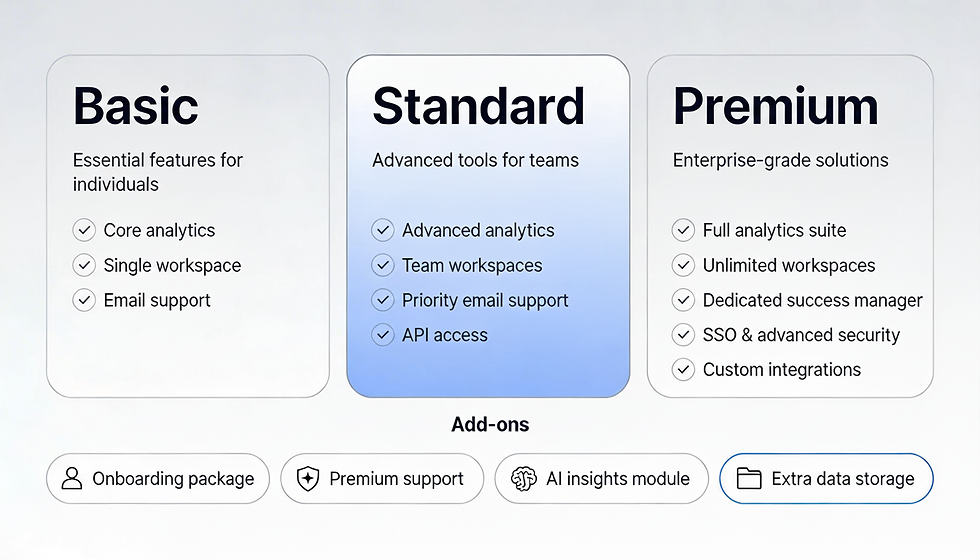
FIGURE 2 – Tiered SaaS Packaging Structure
Shows a three-tier model (e.g., Basic, Standard, Premium) where each level represents a meaningful increase in capability, scale, and business impact.
Add-Ons: Extend Without Breaking the Core
No tier structure is perfect. Some capabilities do not belong inside the core ladder.
Add-ons work best when they:
Serve distinct use cases
Represent advanced or specialized functionality
Complement rather than replace core tiers
A vertical SaaS provider serving healthcare practices offered core practice management tiers. On top of that, it sold industry-specific compliance modules as add-ons. Not every practice needed them. Those that did were willing to pay a premium.
Another example: a data platform sold premium third-party data feeds as add-ons. Core analytics lived in tiers. Specialized data sources were optional. This allowed monetization without bloating base plans.
The danger is overusing add-ons.
One enterprise SaaS company pushed too many essential features into separate modules. Sales cycles lengthened as buyers tried to assemble custom bundles. Pricing felt fragmented.
The company later consolidated core functionality back into structured tiers and reserved add-ons for truly specialized capabilities.
Add-ons should enhance the ladder, not create a parallel pricing system.
Aligning Packaging with Customer Segments
Packaging must reflect real customer differences.
A five-person startup adopting a CRM has different needs than a multinational standardizing sales operations globally. Packaging should account for that without requiring fully custom deals.
A productivity SaaS company structured plans around team size and organizational complexity. The entry tier supported small teams with limited governance. The mid-tier introduced role-based permissions and workflow controls. The enterprise tier added audit logs, SSO, and advanced integrations.
Customers self-selected naturally based on maturity.
Another example: an analytics platform serving retailers created distinct tiers for single-location operators, regional chains, and national brands. The functionality aligned with reporting complexity and integration needs at each scale.
The objective is not perfect segmentation. It is clear alignment between package design and real-world customer evolution.
Governance: Preventing Packaging Drift
Even strong packaging erodes without discipline.
Custom deals accumulate. Legacy plans linger. One-off bundles become normalized.
A B2B SaaS company found that nearly 40 percent of its revenue sat on outdated plans no longer aligned with current tiers. Sales had created bespoke combinations over time. Pricing clarity suffered.
The company implemented several controls:
Quarterly reviews of plan adoption and discounting
Sunset timelines for legacy packages
Clear approval thresholds for non-standard bundles
Renewal playbooks to migrate customers to current tiers
Over time, packaging became simpler and more scalable.
Packaging should evolve as the product evolves. But changes should be intentional, not reactive.
From Complexity to Clarity
As SaaS products grow, complexity is inevitable. Packaging is a powerful mechanism to aligning customer needs with a sustainable go-to-market approach.
In summary, strong SaaS packaging includes:
Creates a clear value ladder
Aligns tiers with customer outcomes
Encourages natural expansion
Uses add-ons strategically
Maintains discipline over time



Comments